In March, TeamPCP turned trusted security tools into weapons. It did not stop there. Across April, May, and June 2026 the campaign breached GitHub itself, poisoned a VS Code extension to steal AI assistant credentials, open-sourced its own worm, and spawned ecosystem-wide copycats. Here is the full timeline, the IOCs, and what to do now.
Revaizor Team
On March 31, 2026, an attacker hijacked the lead axios maintainer's npm account and published two malicious versions — axios@1.14.1 and axios@0.30.4 — injecting a cross-platform remote access trojan via a fake dependency. Here is the full timeline, technical analysis, IOCs, and what to do if you are affected.
Revaizor Team
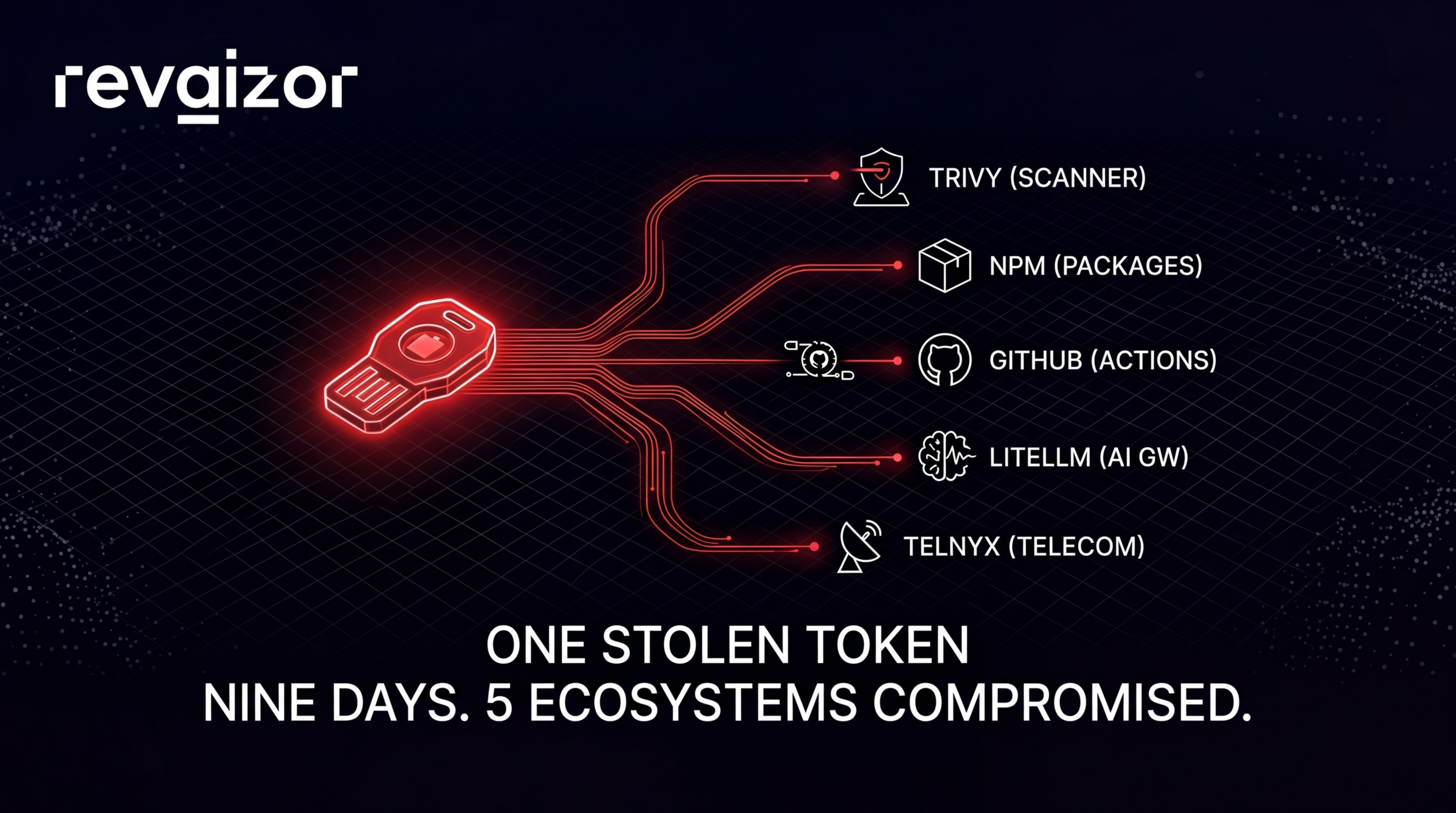
The telnyx Python package was compromised on PyPI this morning. It is the fifth target in a supply chain campaign that has now crossed from vulnerability scanners to CI/CD pipelines to LLM gateways to telecom SDKs in nine days. Here is everything we know, every IOC, and exactly what to do if you are affected.
Revaizor Team
The Trivy supply chain attack in March 2026 compromised one of the most trusted open-source security scanners, cascading through GitHub Actions, Docker Hub, and downstream projects including Checkmarx KICS and LiteLLM. Here is the full timeline, what was affected, and how to respond.
Revaizor Team
LiteLLM's March 2026 vulnerability was a critical PyPI supply chain compromise affecting versions 1.82.7 and 1.82.8. Learn what happened, who was affected, and how to respond.
Revaizor Team
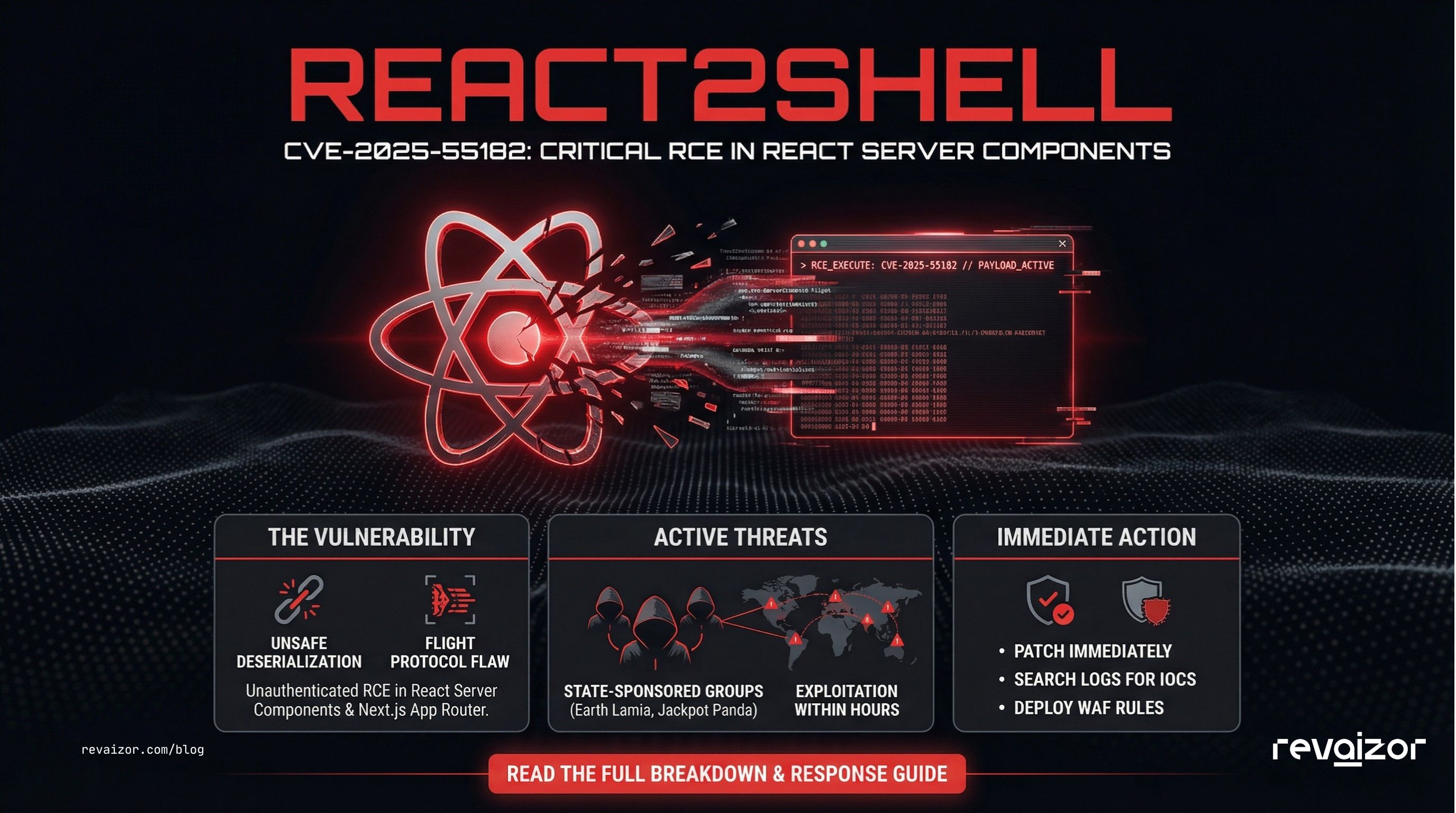
CVE-2025-55182 is being exploited within hours of disclosure. Here's the technical breakdown, who's attacking, and exactly what your team needs to do.
Revaizor Team
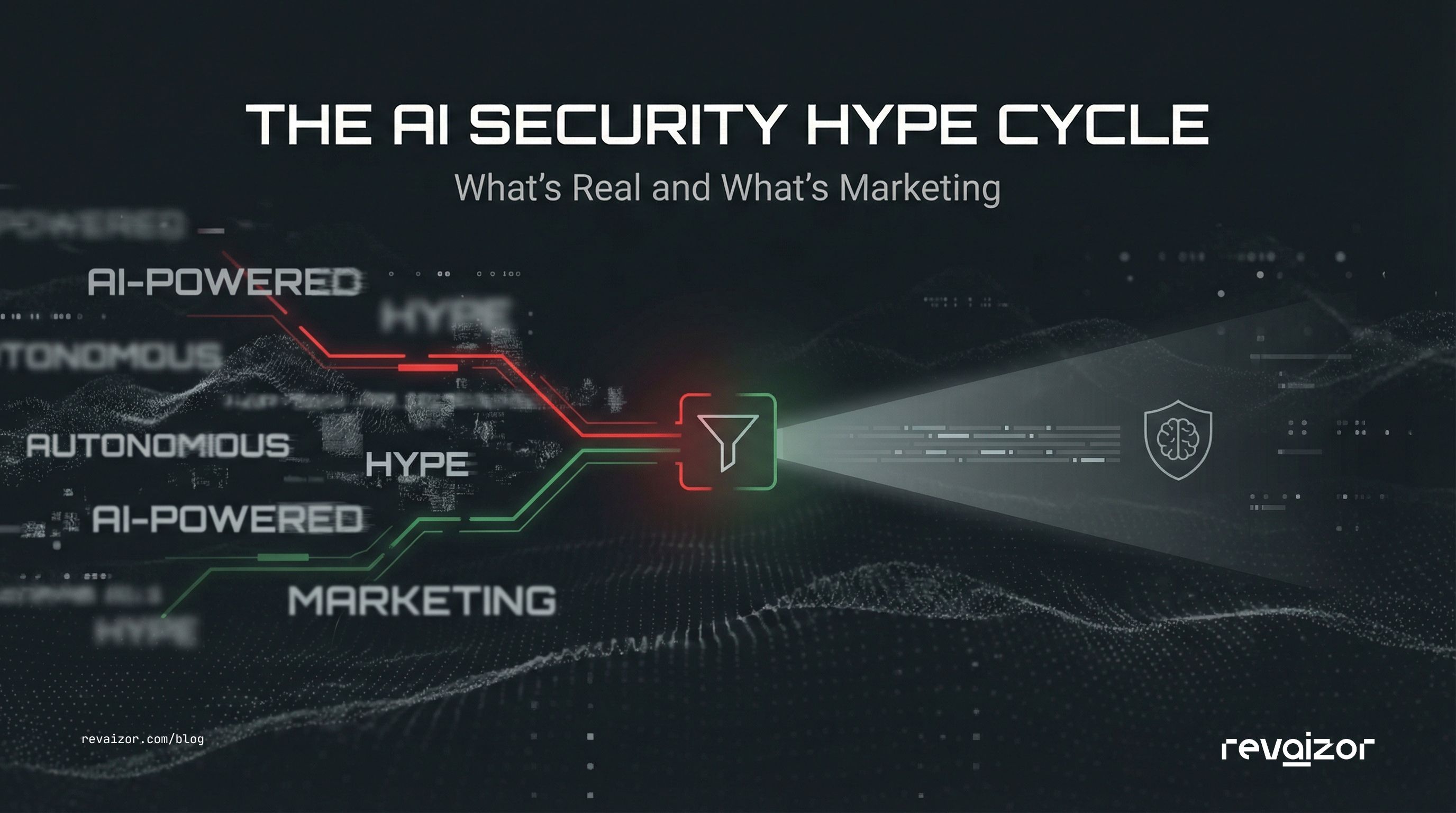
Every security vendor claims AI. Here's how to cut through the noise and identify what's genuine innovation versus rebranded automation.
Revaizor Team
Why defining clear objectives before testing leads to better security outcomes than running generic scans.
Revaizor Team
Agentic AI goes beyond chatbots and copilots. In offensive security, it means AI systems that autonomously plan, execute, and adapt attack strategies.
Revaizor Team
Annual or quarterly pentests made sense when releases were rare. Modern teams deploy daily. Your security testing needs to match.
Revaizor Team
Scanners find potential issues. AI pentesters validate real exploits. Here's why the distinction matters.
Revaizor Team
Traditional pentesting can't keep up with modern release cycles. Here's how autonomous AI changes the equation.
Revaizor Team